There's a peak season for just about everything... When it comes to screenwriting, that time is now. I asked Stage 32 member and screenwriting guru, Julie Gray to break things down.
A regular contributor to the
Huffington Post, Julie directs the Just Effing Entertain Me Screenwriting Competition. Julie has read at production companies including: Walden Media (Narnia, Holes, Journey to the Center of the Earth), Red Wagon (Sony: Memoirs of a Geisha), Cinergi (Swim Fan, The Terminator), Bedford Falls (Blood Diamond, The Last Samurai) and Seed Productions (Hugh Jackman and John Palermo), Julie consults privately with a variety of writers all over the world and has taught at the Oxford Student Union at Oxford University, The West England University in Bristol and San Francisco University in Quito, Ecuador.
Julie also teaches screenwriting classes at Warner Bros., The Great American Pitchfest, The Creative Screenwriting Expo and the Willamette Writer's Conference in Portland, Oregon.
Finally, Julie is a volunteer at the
Afghan Women's Writing Project, and is the founder of
Stories Without Borders, a non-profit organization committed to fostering the creative voices of students and women in the Middle East through the medium of film. A resident of Tel Aviv, Julie's ebook, Just Effing Entertain Me will be available at the Amazon Kindle Store in late spring, 2012. Her ebook
I am Not Myself: A Year Grieving Suicide is currently available on Kindle.
You can
check out Julie's Stage 32 profile here.
Enjoy,
RB

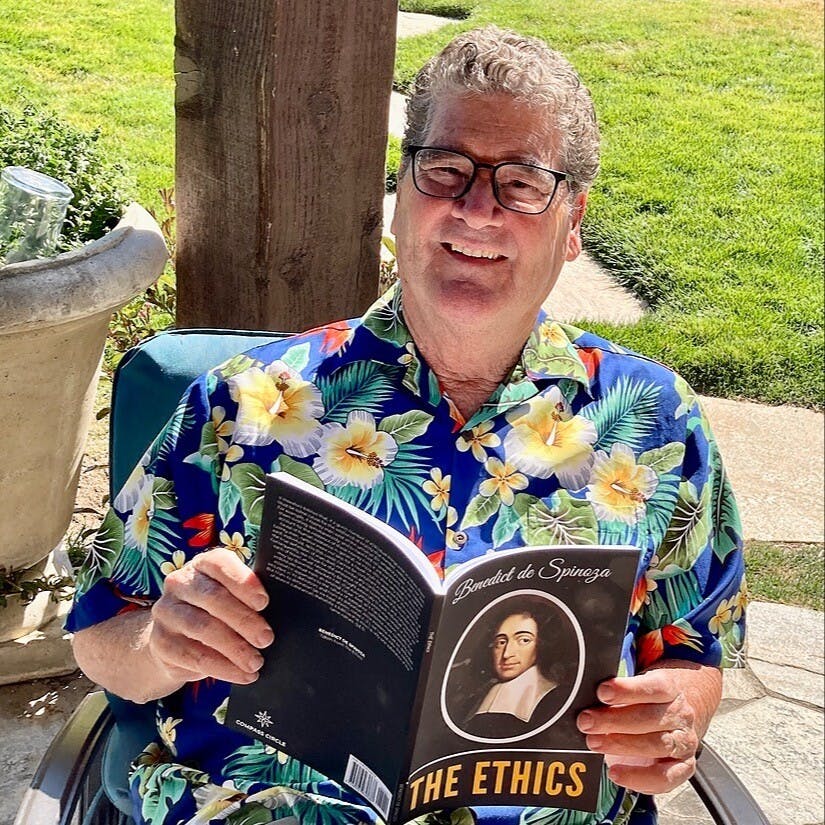
Julie Gray
Every spring, just like birds returning to their native habitat or the migrating butterflies of San Juan Capistrano, screenwriting competitions open their doors for yet another season. And what a flurry it is!
Every year, it seems there are more and more competitions available!
So … what’s good about competitions? Well, aside from the prizes, what competitions really provide for writers are goals and deadlines. But more than that, competitions can offer a way to gauge your writing against that of other writers. It helps you test the waters, in other words. How is your writing compared to other screenwriters? Is your premise as unique as you think? Is your writing fast, fun and engaging? Going up against thousands of other writers is a good way to find out how you are doing.
There is, of course, a great deal of subjectivity in competition judging. I had a script optioned at Fox that just for fun I entered in the Austin Screenwriting Competition. It quarter-finaled only. Oh! The sound and the fury! But I didn’t take it personally. I have run a screenwriting competition for five years now and I get that while there are guidelines and minimums every writer has to meet, there is also just plain old subjectivity.
If you do well in more than one competition, or if you place as a semi-finalist in at least one, you can indeed know that your writing is competitive. And that knowledge does two things: it gives you perspective and it energizes you to keep writing. It is validation, in other words, and we writers really need some good old-fashioned “you done good” approval once in awhile. Can you really put a price on that?
The truth about being a quarterfinalist is that it simply means that your script was better than average. But the thing is, that the average script entered in a competition isn’t very good. Your initial competition is writers who jot off scripts too quickly and enter under-cooked scripts with a thin premise, two-dimensional characters and humungously dense action lines. But that’s only the first wave. After that, as the judges sort through the scripts and compare them to established criteria of competency, artfulness and originality, the competition can be very fierce. That’s your REAL competition, so aim high.
Entering competitions, in my opinion, is a fun way to get and stay motivated, to find out how you are doing compared to others, and to maybe - just maybe - collect some pretty cool prizes.
Not all competitions are the same. Some provide notes and feedback; most don’t. Some are new, some have very old track records (Nicholl comes to mind). Some offer big cash prizes, others offer smaller, more pragmatic prizes. Yes, you can enter your script into as many competitions as you like.
Before entering a competition, ask yourself what your desired outcome is. Of course, everybody wants to win, but you should also seek something more pragmatic and that is to simply see how your work does compared to that of others. If you only get to the quarter-final round, you can certainly mark that as an accomplishment; but when the semis are announced, read the loglines and try to figure out where those writers parted ways from you in terms of premise.
Make sure that the competition you entered is an established one. Winning a semi-final in the Downtown Albuquerque Whatever Competition doesn’t exactly do you any good.
Writers usually have pretty limited resources - most of us have day jobs or other obligations. Nobody has an endless supply of competition entry fees. So choose 4 or 5 comps each year that you submit to.
For my money, the top competitions really worth entering are:
What? I just listed my own competition! Well, of course I did and here’s why: because I am a writer and have entered many of these competitions before I directed my own. I get what’s hard and what’s fun about these competitions. So I designed a competition that awards the winners something much more valuable than cash money - an experience. Click HERE to read about the experiences of past winners.
The bottom line is that like anything else, screenwriting is full of opportunities and widgets and classes and conferences and books that you can spend your money on. But there’s a more important bottom line for writers and that is to write and write and write and write. Even as I write this, it is a beautiful, sunny day in Tel Aviv outside. I would LOVE to go to the beach or do something fun. But I have a lot of writing to do. And it won’t write itself. So there are sacrifices we have to make. Nobody got rich writing one script and then going to a conference to talk about writing scripts. No, chair in butt, unfortunately, is the only way and that’s a fact.
Spend more time writing than you do on online forums about screenwriting. Spend more time writing than you do going to conferences about writing. Spend more time writing than reading about writing. Be judicious with your time and your money. Conferences, books, DVDs, etc. are a wonderful way to bone up on your writing. But choose carefully and well how you spend your money and your time.
Entering a couple of scripts in 3 or 4 competitions each year is a good motivator to get your writing done - on time - and it is also a pretty low investment for what can be a very high return.
Here are five tips before entering any competition:
- Make sure you’ve gotten and implemented feedback from at least 2 or 3 sources.
- Proofread your script to within an inch of its life. Don’t let a typo or 18 cut you loose.
- Write a great logline for the script, whether it is requested or not. Stay under 50 words.
- Follow entry directions carefully and provide all materials requested so you don’t get disqualified on a technicality.
- Submit and don’t look back :). Send those scripts in and get right back to your writing, in other words. Let the announcements come as a wonderful surprise.
Julie will be available to answer questions and respond to any remarks. We also welcome any productive banter, including your experiences with contests, in the comments section below.
nice , cool
That was a great blog/article/piece of screenwriting advice! I use http://www.withoutabox.com to track festivals and competitions. As for coverage, I suggest ScriptShark (www.scriptshark.com) or www.screenplaycoverage.com. They're great because you pay them enough so the analysis you receive is thorough and unbiased (unlike what you may receive from friends/family/your network of writing buddies).
That was a great blog/article/piece of screenwriting advice! I use http://www.withoutabox.com to track festivals and competitions. As for coverage, I suggest ScriptShark (www.scriptshark.com) or www.screenplaycoverage.com. They're great because you pay them enough so the analysis you receive is thor…
For coverage, I would also recommend Andrew Hilton, aka The Screenplay Mechanic. As professional as they come. Notes are spot on. Years of experience. And, a produced screenwriter himself...
www.screenplaymechanic.com
And be sure to tell him RB sent ya!
One thing I check my writing for is a repetition of a word or phrase that can jar the ear when heard or the eye when read. For example, if something floats in one sentence nothing else should float within a paragraph or two at the very least. Thanks again for posting here. All recommendations are gratefully accepted.
FOR SURE; alliterations, repetitive words, all of that stuff. Make it very easy for the reader :)
Great read Julie. Compact and packed with information.
Which begs the question... can a script have too much, or conversely too little, dialog?
Yes, it can. But the question isn't really relevant: dialogue is one of the primary ways that your characters communicate and that the plot moves forward. The question really should be: is this premise working? Is it compelling? It is original? Is it uniquely entertainig? Is it a page turner? :)
SIMPLY INSTRUCTIVE !
Glad you liked the article, Gilbert! xoxo
Love the Stage 32 Blog content! Keep up the excellent work and the excellent guests!
Appreciate it, Benjamin. Curt and I both come from an editorial background, so we're committed to bringing content that informs as much as it entertains. Thanks again...
Thanks for the great advice and valuable information.
Great read Julie. Compact and packed with information.
Which begs the question... can a script have too much, or conversely too little, dialog?
OH YEA.. NOW WHAT.. ?
Hi Julie,
Thanks for sharing. Where can we get hold of contacts and information on good agents, managers and production companies ?
regards
sengbeo
IMDB PRO :)
I'll second that...
What are your thoughts on script analysis services? Is it worth it?
Well, full disclosure - I am a script consultant (among other things!) so of course, my opinion would be yes, use that service, lol. But you know, I used script consultants before I was one and I found it to be helpful to find someone who can give you feedback in an organized, matter-of-fact, honest yet encouraging way. I think the bottom line is that you can only get so far with feedback from friends or fellow writers. Paying a consultant is like going to a specialist. You know? If I want my hair colored so it's okay, I do it myself. If I want it to be AWESOME I go to someone who colors hair for a living. :)
Julie, how much are your script analysis fees? A literary/talent agency in Santa Monica gave me the green light to send a copy of my latest script to them. I'm sure it came from a reader that liked my logline. I just want to make sure I show them the best polished example of my work because I know you only get one chance to impress them.
Hi Daniel - you can contact me at storieswb@gmail.com
So inspiring, thanks for all the support and inspiration!
Divine lession! Thanks so much for this inspirational moment!
LOVE HER! bb
Heya Babz! Back atcha! xoxoo