THE STAGE 32 LOGLINES
Post your loglines. Get and give feedback.

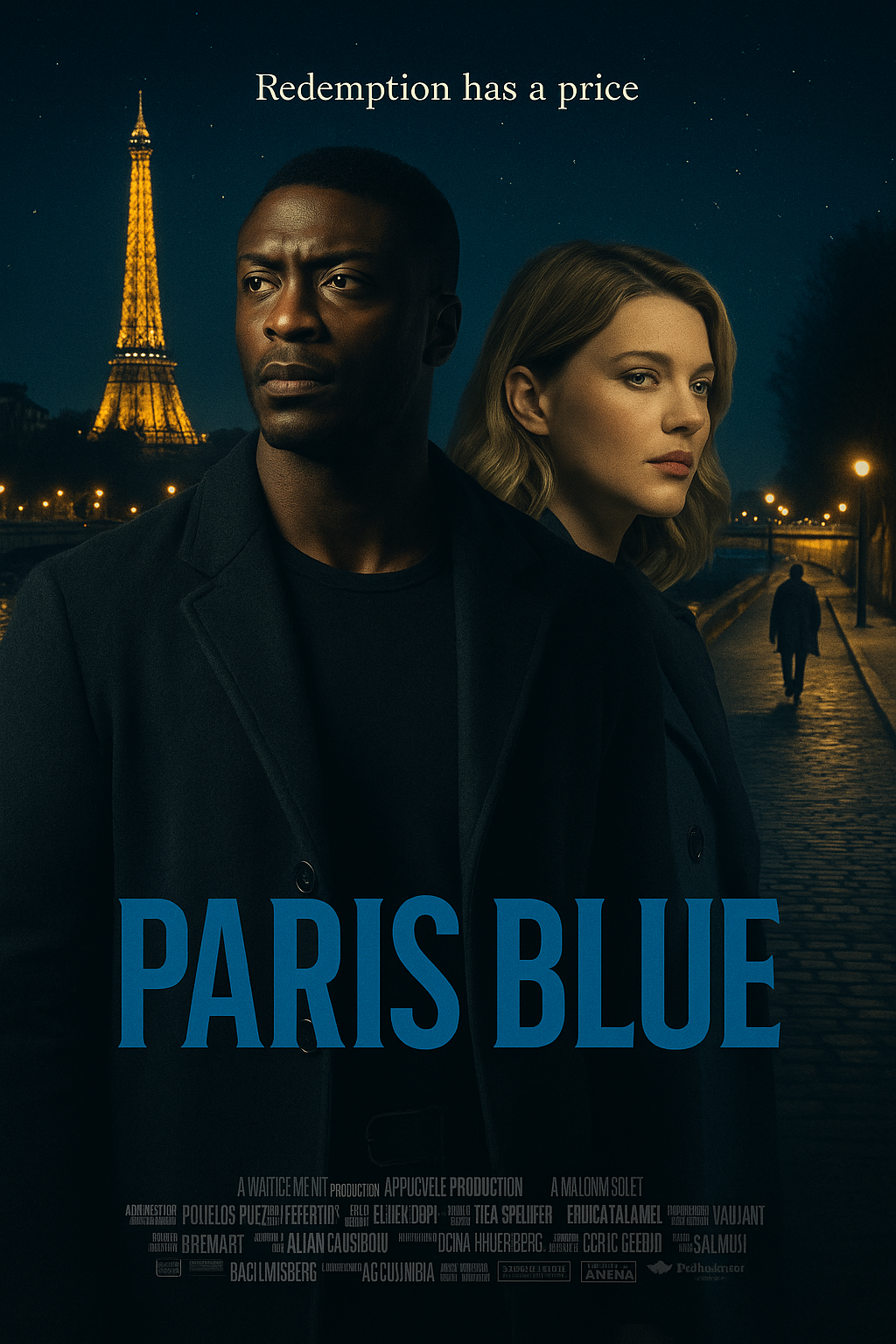
PARIS BLUE
By Steve Fisher
Fleeing scandal in 1960s New York, a jazz musician seeks refuge in Paris—but the murder of a young woman’s brother drags him into a deadly underworld of drugs and violence, threatening to destroy what’s left of his life.
SYNOPSIS:
"Paris Blue" is a noir thriller set in 1950s Paris that follows Coleman Evans, an African American jazz pianist with a dark past, as he becomes entangled in a deadly conflict with a ruthless drug dealer while falling in love with a French record store owner.
The story opens with a montage of 1950s photographs chronicling Coleman's rise and fall in New York's jazz scene - from playing with greats like Charlie Parker and Miles Davis to headlines about his wife's drug overdose death and his arrest with an underage girl. We see Coleman standing alone by the East River, his career and life in ruins.
Five years later in Paris, Coleman has rebuilt a quieter life playing piano at Club Le Cave with his quartet. One night, he meets Sophie Ardent, who runs a small record store and is drawn to his music. Their connection is immediate and deep. However, their budding romance becomes complicated when Sophie's troubled younger brother Olivier is murdered - his throat slit in Sophie's apartment.
We learn that Olivier had been working for Baptiste Gauthier, a violent French drug dealer expanding his territory in Paris. Baptiste presents himself as Olivier's mentor but is actually a sadistic predator who exploits vulnerable young men. When Sophie finds a bloody five-franc coin in her apartment - Baptiste's signature calling card - she realizes he likely killed her brother.
Meanwhile, Coleman has his own dark history with drug dealers. Through flashbacks, we learn his wife was raped and forcibly overdosed by a dealer in New York who later turned up dead in the East River. Coleman, we discover, was not just a musician but had served in Army Special Forces in Korea. The police fabricated charges to destroy his career after he pursued justice for his wife.
As Coleman and Sophie grow closer, Baptiste begins threatening them both. A confrontation at Club Le Cave reveals Coleman's tactical skills when he easily disarms one of Baptiste's thugs. This catches the attention of Police Commissioner Theo Vaillant, who is building a case against Baptiste but lacks evidence.
The story's tension escalates when Sophie finds Olivier's journal revealing Baptiste planned to betray his Algerian drug suppliers. Coleman meets with the supplier, Abreo, who provides him weapons but warns he'll kill Coleman if anything traces back to him. Meanwhile, Baptiste's increasingly erratic violence - including killing a police detective - forces his suppliers to act.
The climax comes when Baptiste's men kidnap Sophie. Coleman tracks them to an underground tunnel system beneath Paris where Baptiste runs his drug operation. In a tactical assault demonstrating his military training, Coleman fights his way through Baptiste's men but is wounded. As Baptiste tries to escape with Sophie by boat, Abreo appears and kills him, having decided Baptiste had become too unstable.
Three months later, we see Coleman performing again at Club Le Cave, now at peace with his past. Sophie watches with her grandfather, while Police Commissioner Vaillant, who has come to respect Coleman, joins them. The film ends with a note about how many Black American jazz musicians found refuge and redemption in Paris during this era, escaping racism and segregation at home.
The screenplay skillfully weaves together elements of film noir, jazz culture, and historical context while exploring themes of revenge, redemption, and the possibility of rebuilding a life after tragedy. The complex relationship between Coleman and Sophie forms the emotional core, while the crime plot provides suspense and action. The Paris setting is richly atmospheric, and the integration of jazz music throughout helps establish both mood and character.
The story also touches on important historical elements - the treatment of Black musicians in America, the French-Algerian conflict's impact on Paris's criminal underworld, and how jazz became an important cultural bridge. Coleman and Sophie's relationship represents a kind of healing and acceptance neither could find in their separate traumatic pasts.
The police subplot with Commissioner Vaillant adds depth to the criminal investigation aspects while avoiding typical police procedural clichés. His character represents the complexity of law enforcement in a changing Paris, trying to maintain order while dealing with political constraints and emerging criminal enterprises.
The script balances character development, action, and historical context while maintaining noir styling and pacing. The resolution provides both satisfaction in terms of justice served and emotional closure for the main characters, while acknowledging the broader historical context of Black American artists finding freedom and acceptance in Paris during this era.
PARIS BLUE
View screenplay Register / Log In

I would appreciate any feedback on my new script, Paris Blue. The Logline, the script, the first ten pages... Anything you would like to send. Thanks in advance.
Rated this logline