THE STAGE 32 LOGLINES
Post your loglines. Get and give feedback.

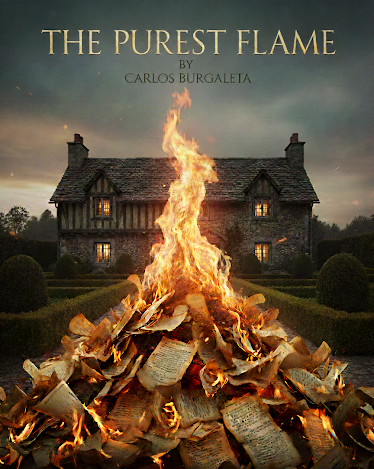
THE PUREST FLAME
By Carlos Burgaleta
In the paranoid atmosphere of 1980s Albania, a rising poet arrives at the villa of an literary official and finds himself embroiled in a convoluted struggle that exposes the brutal price of political survival.
SYNOPSIS:
Summer of 1981. AGON, 30, a young poet eager to climb the ranks of Albania’s state-sanctioned literary, travels to a remote villa on the outskirts of Tirana. The CHAUFFEUR, 50, who ferries him chatters about football, political doctrine, and offers contraband whiskey. The exchange is civil yet probing, a taste of the ideological examination that defines life under the Party of Labour.
The car arrives at the villa and Agon enters the property, at the heart of which stands a rustic, three-story house. As he walks through the garden and admires a statue depicting Calliope, the Greek muse, Agon is startled by BASHKIM, 60, an elegant man with tousled gray hair and intensely light eyes who walks with the aid of a heavy, silver-handled cane. After gifting Agon a red rose, Bashkim introduces himself as the Vice President of the League of Writers and ushers Agon into his house, teasing him with a mix of mentorship and playful threats.
Bashkim leads Agon to a guest room, mentioning the renowned writer Dritëro Agolli recently stayed there. Left alone, Agon is unsettled by noises from the garden and is startled again by Bashkim, who jokingly asks what he was looking for behind his "Skanderbeg" painting, a gift for his Party anniversary. Later, after praising his talent, Bashkim begins his critique of Agon's manuscript and puts him through a tense ideological test. Strolling through the garden, he again probes Agon's loyalties before pausing by an old shed, where he sadly reveals his wife died twenty years ago after a fall.
That night, while having dinner and drinking, Bashkim reveals shrapnel scars on his leg from and recounts a horrific war story that leaves Agon shocked. Later, in his room, Agon checks the rotary phone for a listening device and spots a shadowy figure in the garden. After the appearance of DRITA, 60, a mysterious woman employed at the villa, a game of suspicion and betrayal will begin and an unpredictable series of twists will lead to a cathartic ending.
THE PUREST FLAME
View screenplay Register / Log In

"The Purest Flame" is a low-budget political drama-thriller (like a blend of "The Lives of Others”, "Sleuth" and "Dogtooth"), with some artistic ambitions – more poetic than visual – and unexpected climactic scenes that break its quiet narrative pace. Besides its dynamic and expressive dialogue, it’s a script with an interesting back story about the destructive nature of power, the nostalgia for lost integrity and the decline of idealism.
Rated this logline