How To Make A Feature Film Based On Your Short Film

Hosted by Nicholas Bogner
$49
On Demand Webinar - Available for immediate viewing and unlimited access.
Start Learning

Hosted by Nicholas Bogner
$49
On Demand Webinar - Available for immediate viewing and unlimited access.

Webinar hosted by: Nicholas Bogner
Head of Literary / Manager at Affirmative Entertainment
As a literary manager Nicholas Bogner has run the literary branch of Affirmative Entertainment for the last fifteen years. Under his stewardship, he has had numerous movies made including Wedding Season for Netflix announced in Deadline, Infinite Storm for Sony, announced in Variety, Come Play for Amblin and Focus Features and has sold television pilots to just about all of the majors from network to streamers. In addition, many of his writers have been staffed at various levels of successful shows over the years including a supernatural thriller sold to Paramount, announced on Deadline. Previously, Bogner served as Vice President of Original Programming for TNT. In this capacity, he was responsible for the development of all long form – including two-hour movies, backdoor pilots, mini-series - for the network’s TNT Originals franchise. Bogner worked on several high-profile projects including Steven Spielberg’s twelve-hour mini Into The West as well as Stephen King’s Salem’s Lot. Beyond these projects, Bogner shepherded over 15 movies into production. Prior to assuming his position at TNT, Bogner spent four years at Cruise-Wagner Productions (Tom Cruise and Paul Wagner), where he spearheaded the acquisition of material, supervised writers and collaborated with directors and talent on such films as Mission Impossible: 2, Without Limits, Vanilla Sky, and The Others, which he’s credited with finding and supervising. Bogner began his career at the Agency for Performing Arts (APA) before becoming a story editor for Michael Douglas at 20th Century Fox. Bogner has two produced credits as a screenwriter, The Little Death and No Strings Attached. He also produced Soccer Mom starring Emily Osment and Missi Pyle for Starz and Anchor Bay. Most recently, he produced A Nice Girl Like You (based on a non-fiction book by Ayn Carrillo- Gailey) which stars Lucy Hale. Full Bio »
Webinar Summary

Learn how to turn your short film into intellectual property (IP) that you can then develop and make as a feature film from esteemed literary manager Nicholas Bogner of Affirmative Entertainment, whose client's short films have gotten feature films deals with major companies like Steven Spielberg's AMBLIN PARTNERS!
PLUS! You'll receive the scripts for the short film LARRY and the feature film based off the short, COME PLAY, that was produced by Amblin.
Intellectual Property (IP), such as books, toys, comic books, graphic novels, short stories, etc., are a bedrock of film and television development. This year's biggest films, including BARBIE and OPPENHEIMER, are based on pre-existing IP. The reality of the current film and television marketplace is that it is increasingly difficult to sell your project if it is not based on any IP. And that's why making a short film that can then be used as IP that you develop into a feature film has become a proven avenue to success.
There is an absolute obsession in the marketplace to have material based on pre-existing IP as a way to mitigate the risk of the investment in the project. If there’s already been an audience for the book, short film, article, etc., then film and television buyers feel at ease that there will be a built in audience for their large investment into the film. While original films and series do get made, it is particularly challenging for new and emerging writers and filmmakers to get their project sold if it is not based on IP. However, there is a way for you to create your own IP without having to spend big bucks to buy the rights to a book or a person’s life, and that is to make your own short film! One notable example of a short film leading to a feature film is Damien Chazelle's WHIPLASH, which became the Academy Award winning feature film of the same name and launched Damien Chazelle's career (he went on to write and direct LA LA LAND, FIRST MAN, and BABYLON).
In this exclusive Stage 32 Webinar, you will learn how you can use your short film as IP to help sell your feature film or television project. You could be sitting on a gold mine with your short film, and we’re going to help you figure out how to leverage it to make your larger project. Teaching you everything you need to know about how to use your short film as IP for a feature film or television project is literary manager Nicholas Bogner of Affirmative Entertainment. Former VP of Original Programming at TNT and head of development at CRUISE/WAGNER, Nicholas’ clients have had immense success making shorts and creating their own IP.
In an information packed 90 minutes, Nicholas will share how he guided his client Jacob Chase to success through his short film. Jacob made the short LARRY, which was then sold in a bidding war to Steven Spielberg’s company, AMBLIN PARTNERS. Jacob’s concept was subsequently made into a feature film for Amblin and Focus Films with the new title of COME PLAY. Subsequently, Jacob made a short film titled MR. BLUR, which sold to BLUMHOUSE, and is currently being adapted into a feature film. Many of Nicholas’ other clients have also made shorts which has led to representation and future projects.
You will walk away from this webinar with the skills and industry insight you need to use your short film as IP to leverage a feature film or television series deal.
PLUS! You’ll receive exclusive handouts to help you create IP out of your short film. Downloads include:
- Script for the short film LARRY
- Script for the feature film COME PLAY based off LARRY

What You'll Learn
- WRITE YOUR SHORT SCRIPT:
- LENGTH: be mindful of the length. How long should your short be?
- BUDGET: Make sure it is budget friendly since it is more than likely you will be financing it yourself
- How can you write a short that won't break the bank?
- IS THERE A MOVIE IN YOUR SHORT? It will be more beneficial for there to be a potential movie concept in your short (at least that is what your manager and/or agent will hope for)
- Why you should make a visual short that can really showcase your talent
- HIRE YOUR CREW (HOPEFULLY FOR FREE!)
- You need a producer (other than yourself)
- What jobs you should do and shouldn't do as a director
- The importance of contracts!
- Why you need to cover yourself and how it can come back to bite you if you don't
- Perhaps there is a promise of monetary payment in the event you sell the project but limit your exposure
- Why you need to be flexible and how to do it
- Crew will bolt if they find paid work, so have back-ups in mind. Consider shooting over a weekend, so day jobs don’t get impacted
- You need a producer (other than yourself)
- CASTING
- Your budget might be minimal, but don’t compromise when it comes to casting (talent-wise). And think big. Professional Actors like to work and when they are between shows, you might be able to land someone much bigger than you anticipated
- How do you get a name actor in your short?
- THE FEATURE FILM
- If there is a feature film in your short (hopefully), pick a scene that really sells it to buyers. Think WHIPLASH.
- You don’t have to have the film figured out before you make your short, but have it in the back of your mind. Soon as you share it with your reps, they will want to hear the feature film version.
- SUCCESS STORIES THAT I HAVE HELPED SELL:
- OCULUS by Mike Flanagan
- COME PLAY (aka LARRY) by Jacob Chase
- MR. BLUR by Jacob Chase
- Q&A with Nicholas
About Your Instructor
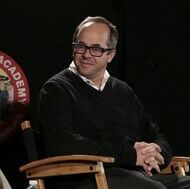
Nicholas Bogner
FAQs
Q: How do I watch my webinar live?
A: If you received a confirmation that your webinar is on Go to Webinar, you will receive an email from Go to Webinar with further instructions for participating in the live webinar. You can also access your webinar link in your purchase history located under settings in the top right-hand corner of your Stage 32 profile.
If you received a confirmation that your webinar is on Zoom, you will receive a separate email from Zoom with further instructions for participating in the live webinar. Your login link will not be in your Stage 32 profile. If you did not receive your link via Zoom please email support@stage32.com.
Q: How do I watch my webinar on demand?
A: You will be able to watch your webinar on demand as many times as you’d like inside your Stage 32 profile. The recording is processed and posted between 24-48 hours after the webinar concludes. You can follow the instructions below.
YOU MUST HAVE A STAGE 32 PROFILE TO WATCH YOUR VIDEO – STAGE 32 IS FREE TO JOIN
If You Already Have a Stage 32 Profile:
- Log into your Stage 32 profile
- Click "Settings" in the top right-hand corner (gear icon)
- Click "Purchase History"
- Choose this webinar and click the link to view
- Go to www.stage32.com
- Create a profile using the SAME email address you used to sign up for this webinar. The email addresses must match in order to watch the webinar.
- Once you have your profile set up, you can view the webinar by clicking "Settings" in the top right hand corner (gear icon)
- Click "Purchase History"
- Choose this webinar and click the link to view
Q: What is the format of a webinar?
A: Stage 32 Next Level Webinars are typically 90-minute educational broadcasts that take place online using a designated software program from Stage 32. Your webinar will be taught by a working industry professional with in-depth teaching on a topic. If you are able to attend live you will be able to ask your Stage 32 Educator questions during Q&A.
Q: What are the system requirements to watch my webinar live?
A: You will need to meet the following system requirements in order to run the webinar software: Windows 7 or later Mac OS X 10.9 (Mavericks) or later.
If you have Windows XP, Windows Vista and Mac OS X 10.9 (Mountain Lion): The webinar software does not support these operating systems. If you are running one of those operating systems, please upgrade now in order to be able to view a live webinar. Upgrade your Windows computer / Upgrade your Mac computer.
Q: What if I cannot attend the live webinar?
A: If you cannot attend a live webinar or purchase an on demand webinar, you will have access to the entire recorded broadcast, including the Q&A.
Q: Will I have access to the webinar afterward to re-watch?
A: Yes! Like all Stage 32 education, after the purchase of a live or on demand webinar, you will have on-demand access to the recording.
Q: How do I get a copy of the handouts provided?
A: If the webinar you take included handouts you can find them as downloads underneath your on demand video. You must be logged into your Stage 32 profile to view the video and get the handouts by clicking settings in the top right hand corner, then clicking purchase history.
Q: What if I need accessibility and accommodations?
A: Email support@stage32.com to request accommodations.
Thanks for your loyalty to Stage 32 Education. We value having you in the Stage 32 community.
If you have any further questions, we are always happy to help. Please contact Stage 32 support at support@stage32.com.
Relevant Tags
Share with friends:
Questions?
Other education that may be of interest to you:
The WR Pitch Tank with Nicholas Bogner.
Learn to be great at pitching in the Room. Writers pitch for 5 minutes (timed) and Nicholas and the Stage 32 team will break the pitch down and offer constructive, supportive feedback in order to graft your pitch to its best version. This is a safe environment, and all are welcome to join!

Producing Class: How to Budget & Manage a Production
Learn How To Budget and Manage Your Film or TV Project from an Emmy Winning Producer Whether you’re a producer, director, or a department head, budgeting and managing your production is the key to creating a successful film. In this exclusive, on-demand 4-session Stage 32 class you’ll learn how to identify and determine your budget needs and learn tips and tricks to keeping on budget and making the most of each dollar. You’ll find out how to not only plan for each day, but to execute with the end-game in mind. Whether it’s a film festival premiere, distribution with a streaming platform, awards, or a theatrical release, you need to know where you’re going in order to pave the road to success. A poorly planned film can derail quickly and the budget can balloon out of control. If you don’t have the right tools, resources, and foresight, you’ll end up with a film that can’t be completed. This class and assignments will help you identify the budget level that’s right for your film, point you to the tools to manage it, and provide you with tips for building relationships and resources to support your efforts. Class take-aways prepare you for creating and managing a company of crew, cast, and stakeholders. You’ll come away from this class with the knowledge to ask the right questions and build a solid plan for your next film. Sharing this invaluable information for you exclusively through Stage 32 is Allison Vanore, an Emmy Award-winning producer with projects at Amazon Prime, NBC Universal, Canvas Media Studios, Facebook Watch, and more. She produced the six-time Emmy-winning series AFTER FOREVER and directed the follow-up special RILEY'S UNFORGETTABLE SCHOOL PROJECT, for which she was awarded the Television Academy Chairman's Pillar Award for getting the production back to work safely during the pandemic. She also produced the award-winning series DARK/WEB and currently produces digital content for Mattel's doll brands, American Girl and Barbie. She was previously the Head of Production at Canvas Media Studios. Having produced films during these significant union, health, and safety changes, Allison is uniquely equipped to highlight the obstacles you're about to face and show you how to circumvent them. WHAT MAKES THIS CLASS UNIQUE How to identify essential elements in your script during development. Practice assignments for creating a plan for a crew of 60 people And more great resources!

Navigating Today's Distribution Landscape To Successfully Release Your Film
The landscape of distribution has shifted dramatically over recent years and continues to change in this post-pandemic world. While there are more places than ever to go to for distribution, there’s also more competition for your project to be noticed by distributors and, once distributed, for viewers to decide to watch your film over the other thousands at their fingertips. Moreover, with so many companies and services in this space, it can be difficult to determine which companies are actually on the up-and-up and which will treat your film with the respect it deserves. If you’re trying to get your film picked up right now or hope to have your feature project distributed in the future, the most important step is to understand what the landscape looks like today and what your options actually are. Let’s break it down for you. Kristin Harris is a seasoned entertainment executive who has spent the past 15 years in the independent distribution space. She has held key acquisition, development, and production roles at Starz Media, Overture Films, and Cinedigm Entertainment Group. Kristin currently serves as VP, Distribution and Acquisitions at Good Deed Entertainment, where she oversees all aspects of the company's distribution arm and manages the release slate, which includes EXTRA ORDINARY, JOURNEY’S END, Spirit Award Nominee, TO DUST, and the Academy Award nominated LOVING VINCENT. Kristin will teach you how film distribution currently works today, what options are currently available to you and your feature film, and how to best navigate this world to ultimately get people to watch your project. Making decisions regarding distribution for your film can be a daunting task, but Kristin is going to give you the most up-to-date and comprehensive breakdown of what distribution looks like today so you can be armed with facts and strategies when finding the best release strategy for your own film. Praise for Kristin: "Very informative and have learned a great deal. Will definitely put to use for our Feature Film Projects. Thank you!" -Haskell A. "Very good practical information detailed enough to get the lay of the land on this topic."-James P. "Great info in a new age." -Mary M.

Good in a Zoom Room: How to Nail Your Remote Pitch - with Pete Goldfinger (SPIRAL, JIGSAW)
Learn how to pitch remotely from the writer of JIGSAW and SPIRAL (which hit #1 at the box office upon release) Includes a live pitch demonstration and an exclusive pitch workshop where YOU can practice your Zoom pitch and receive notes! Pitching your projects has changed DRASTICALLY over the past several years, as we’ve moved from traditional in-person pitches between to mostly remote ones. Zoom pitches are here to stay and will remain a consistent aspect of the industry. That's why it's imperative that you know how to pitch well over Zoom... having the right tools, tips, and materials at your fingertips can really make your pitch shine. Now, more than ever, you must be quick, concise, and clear. To avoid aimless rambling or unnecessary detail and conversation, structure is key. And once that structure is in place, your well-developed pitch can take you to the next level. What are the elements you need to pitch to a development executive or producer to get you to that next level? If you don’t know how to pitch efficiently while keeping your concept clear, the virtual pitch meeting you’ve waited weeks to have could come to an abrupt end. Those who don’t take the time to practice and think they can roll through on the fly quickly, discover they’ve missed out on an incredible opportunity. But armed with the right tools, conversation, and materials, your chances are as good as anyone else’s. Pete Goldfinger knows what those tools are. Pete is an incredibly successful feature and television writer in Hollywood, perhaps best known for penning two recent features in the SAW horror universe, including JIGSAW, which grossed over $100 million, and SPIRAL, starring Samuel L. Jackson and Chris Rock, which debuted at number one at the box office. Other credits of Peter’s include SORORITY ROW, PIRANHA 3D and TV shows like TEENAGE MUTANT NINJA TURTLES and AVATAR: THE LAST AIRBENDER. When he’s not writing for the screen, Pete is running and hosting his own screenwriting retreats, in-person workshops, and Zoom classes. Students of Pete’s classes learn how to turn their projects into marketable, saleable products, and he’s going to deliver these same principles to Stage 32’s community. During this inofrmation-packed on-demand webinar, Pete will show you how to deliver the most valuable and authentic pitch possible by discussing the elements that need to go into a pitch so that you hook producers and showrunners quickly. From handling (sometimes) awkward small talk to delivering strong loglines with pitch decks, Pete will share his years of experience so that you leave feeling confident about your next (or first!) virtual pitch. After passing on his golden nuggets of wisdom, Pete will deliver a live pitch demonstration, who will take attendees’ ideas on what to pitch and then deliver his pitch on the spot to give you a feel of what Zoom pitching and thinking on your feet is really like.

Netflix + Stage 32 Present: Television Pilot Story Structure
Netflix and Stage 32 have partnered on an exclusive global education series in an effort to democratize the worldwide entertainment industry. Together, over the course of 5 webcasts Stage 32's world class educators will bring their knowledge of what it takes to write, develop and produce today's television for the Stage 32 and Netflix creator community. To kick things off, we are going to talking about television pilot story structure. Nailing your TV drama’s story structure—specifically your pilot—is no easy task. In the span of just 40-60 pages, you have to introduce your world, your characters, your central plot and conflict, and your inciting incident, all while keeping your pacing consistent, finding some resolution for that episode, and allowing your audience to want to watch more. This is a complicated, and delicate game and ultimately comes down to how you structure and map out your script before you start writing. No matter what genre you’re writing in, understanding how to structure your pilot is vital. Gaining a clear grasp on how successful drama pilots are arranged and the rules they all follow is a necessary step if you want to have a show that will get picked up and ultimately connect with an audience. Anna Henry is a Producer and Development Executive who has worked at CBS, ABC, Nickelodeon, as well as multiple production companies and in literary management. Her clients have worked on shows such as THE DEUCE, VINYL, SEVEN SECONDS, VIDA, CHICAGO FIRE, and THE FLASH, and have set up projects at Netflix, AMC, Amazon, Starz, HBO, Sony, EOne, Corus, and others. Anna will go in-depth on how to properly structure your drama TV series pilot and will use real past pilot scripts as examples as she breaks down, act by act, the elements necessary to turn your series pilot into stand-out script. Anna will go over the main types of one-hour pilots and will outline the elements for pilot development, including story engine, world, characters, themes and tone. She’ll discuss how to select and map your own template show as well as incorporating multiple plotlines. Anna will then delve into the function and elements of your pilot’s teaser and Acts 1 through 5, as well as your pilot launch, pilot climax, and series launch. She will finally lay out the most common structure problems that you should avoid. Don’t even think about starting to write your own drama pilot until you gain the tools Anna will provide. Examples will be used from notable past one-hour drama pilots on network, cable, and streaming platforms. PLUS! you will receive story maps/outlines broken down for each of these pilots: LUPIN (Netflix) SUCCESSION (HBO) THE EXPANSE (Syfy) THE MARVELOUS MRS. MAISEL (Amazon) Note: You will receive the Zoom link to login by the morning of the webinar. If you are not yet a member of the Stage 32 community, we encourage you to join the community today at www.stage32.com, it is FREE! You will instantly connect with over 800,000 creatives and professionals in the entertainment industry from all over the world who use Stage 32 to network, find work, learn and develop their projects. YOU MUST HAVE A STAGE 32 PROFILE TO WATCH YOUR VIDEO.

How to Avoid Potholes When Building a Writing Career
It’s the dream of many to have a career as a writer for TV or film, to be able to make a living creating worlds and telling stories. Just ask almost anyone at any coffee shop. However the life of a writer, even the most successful, isn’t always easy. The career path is fraught, unpredictable, and inconsistent. Every writer breaks in (or doesn’t) in different ways, and as a result, there isn’t a singular roadmap for aspiring writers to find the success they’re looking for. That said, having a keen understanding of the industry you’re trying to break into and a wherewithal of potentially helpful steps on your journey is vital in finding your place and advancing in your career. The truth is there’s so much more that goes into being a writer than just writing. Creative chops alone won’t save you. You are creating art for a market and therefore need to understand how the market operates in order to work within it. And while every writer’s career is unique, there are still commonalities and patterns among them and mistakes many have made that you can avoid by learning from them. Lee Sternthal is a screenwriter, director and photographer who has written screenplays for every major studio, including TRON: LEGACY for Disney, as well as scripts for Johnny Depp, Mel Gibson and many others. His film, THE WORDS starring Bradley Cooper, Zoe Saldana and Jeremy Irons was an Official Sundance Film Festival selection and was later bought by CBS Films. Lee is a Sundance Institute Fellow, and his work has appeared on The Black List. Through his journey in this industry he has seen it all - the good, the bad and the ugly - and has come to Stage 32 exclusively to tell you about it. Lee will reflect on his own career as a writer, the mistakes he’s made and the successes he’s found, both in the indie space and the studio system, to give you the perspective, lessons learned, and strategies to better navigate your own writing career. He’ll begin by focusing on writers just starting out and will discuss whether new writers need a manager and whether they need an agent. He’ll then talk about the pros and cons of having a writing partner and what to expect if you join forces with someone else. He will discuss Sundance Film Festival and reveal what actually happens if your film gets accepted. Lee will also discuss the insider Hollywood script survey the Black List from and illustrate what happens when your script appears on this list. He’ll then delve into screenwriting services, how they can be helpful, and how they can be harmful. Next Lee will then share his own experiences, both writing for a studio for the Disney film TRON: LEGACY as well as writing for the independent project THE WORDS to give you a sense of what those experiences are like from the inside. He’ll discuss how to know how much you’re able to take on and how to grapple with the doubt and Imposters Syndrome that is incredibly common among writers starting to find success. He’ll then go over the best ways to continue to pay the bills as a new screenwriter. Finally, Lee will give you his insider knowledge of the industry, including how to understand who “The Players” are and how to navigate them, what “The Venues” are and how they operate and how to work different rooms. Praise for Lee’s Webinar: “It was great to hear about all of Lee’s different experiences. I feel like I have a better sense of what to expect and what to do moving forward to keep on writing!” -Dennis G. “Lee was great! This was such an interesting webinar!” -Betty H. “I’m so glad I saw this! Lee has so much knowledge to share.” -Terry C. “Lee definitely answered a lot of big questions I’ve been asking myself about getting into writing, and now I’m excited to take some next steps. Thanks!” -Gwen D.
 Register / Log In
